The Art Behind Painterly Portraits: Understanding Distance and Perspective
Why Distance Matters More Than Your Lens for Creating Painterly, Fine Art Portraits in Oahu
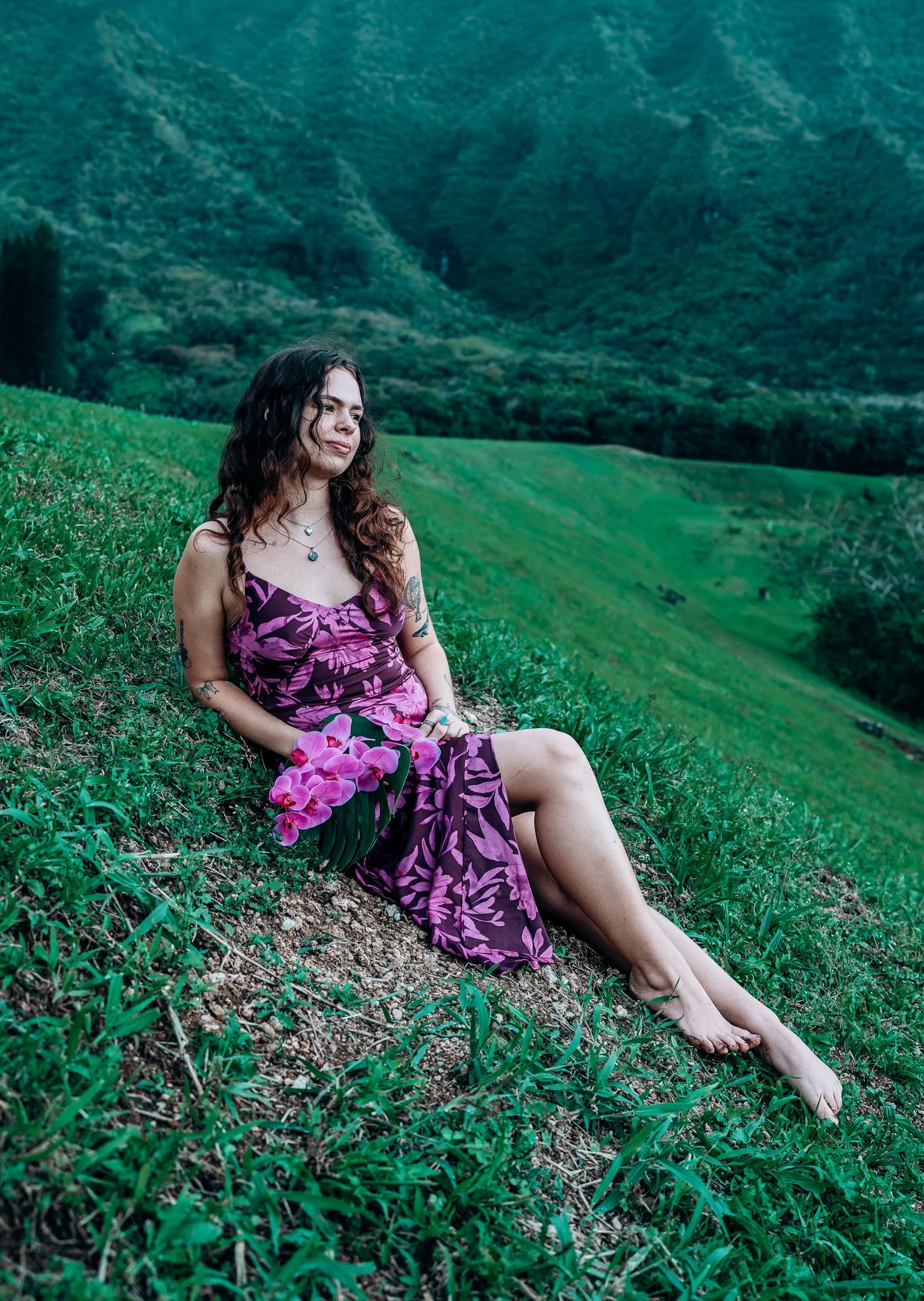
Outdoor Oahu portrait photography of a young woman in a purple floral dress sitting on a green mountainside, holding pink orchids, with soft natural light and a painterly, cinematic style.
As shown in this Flora and Femina Instagram reel, if you want sharp portraits that also feel like a painting, the answer is not just your lens or your editing style. The real difference comes down to a photographic concept that many photographers overlook. That concept is distance.
Lens choice does matter. In a previous comparison, I explored the visual differences between a 35mm lens and an 85mm lens in portrait photography. The differences can be subtle at first glance, but when you begin to study facial structure more closely, they become much more significant.
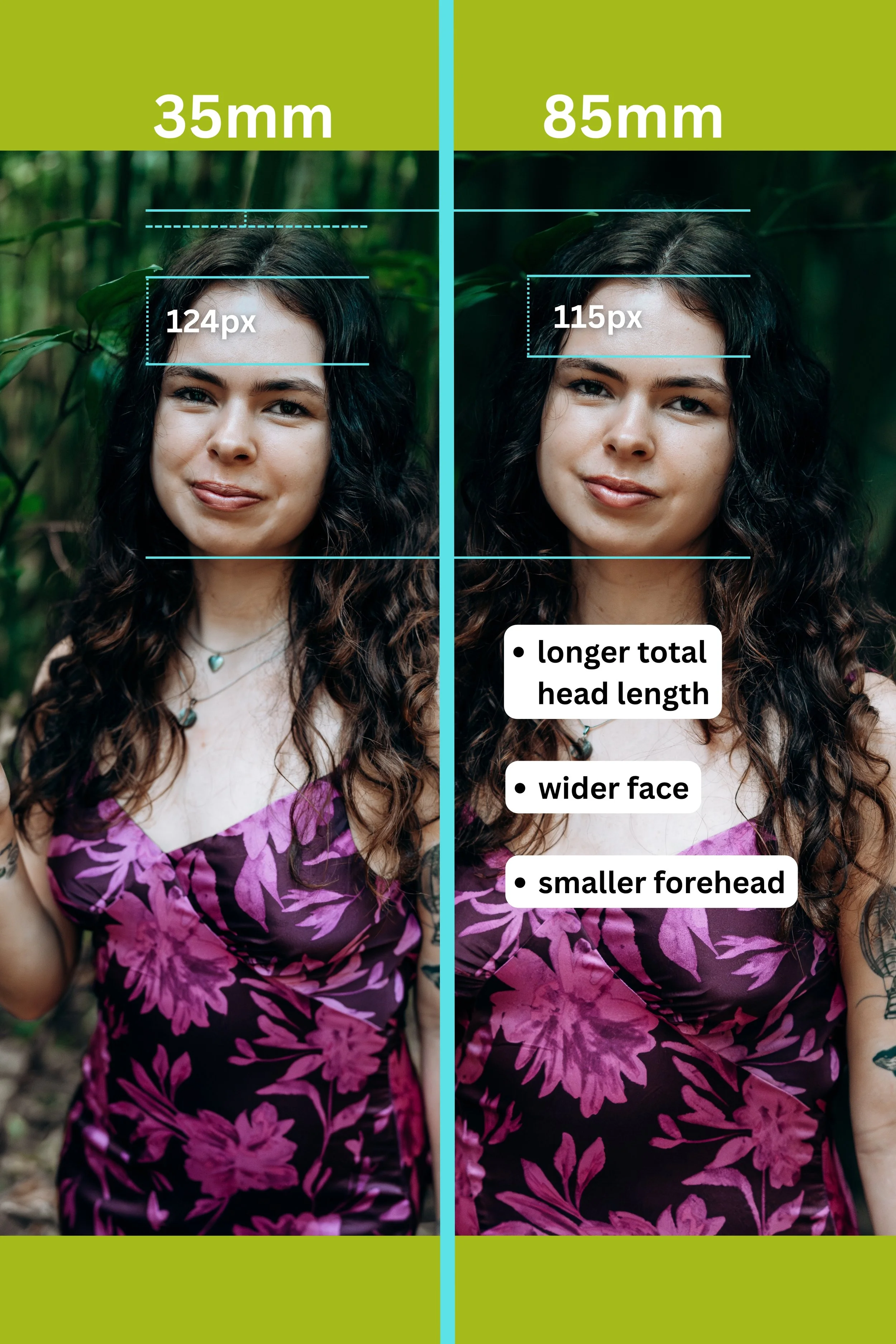
Side by side portrait comparison of 35mm vs 85mm lens showing facial distortion, perspective differences, and how focal length affects face shape in portrait photography
With an 85mm lens, facial features often appear more balanced and symmetrical. The face may look longer, smoother, and more refined. In contrast, a 35mm lens can introduce distortion, especially when used up close. Features like the forehead, nose, and jawline can become exaggerated, creating a less natural appearance.
But here is where things get interesting.
When you actually measure and compare these images, something unexpected happens. Even though the lenses are different, the most important factor is not the lens itself. It is the distance between you and your subject.
Two portraits taken with the exact same 35mm lens can look completely different depending on how far away the photographer is standing. When you step back and then crop in, the subject’s features begin to appear more proportional and natural. The distortion decreases, and the image starts to resemble what you might expect from a longer focal length.
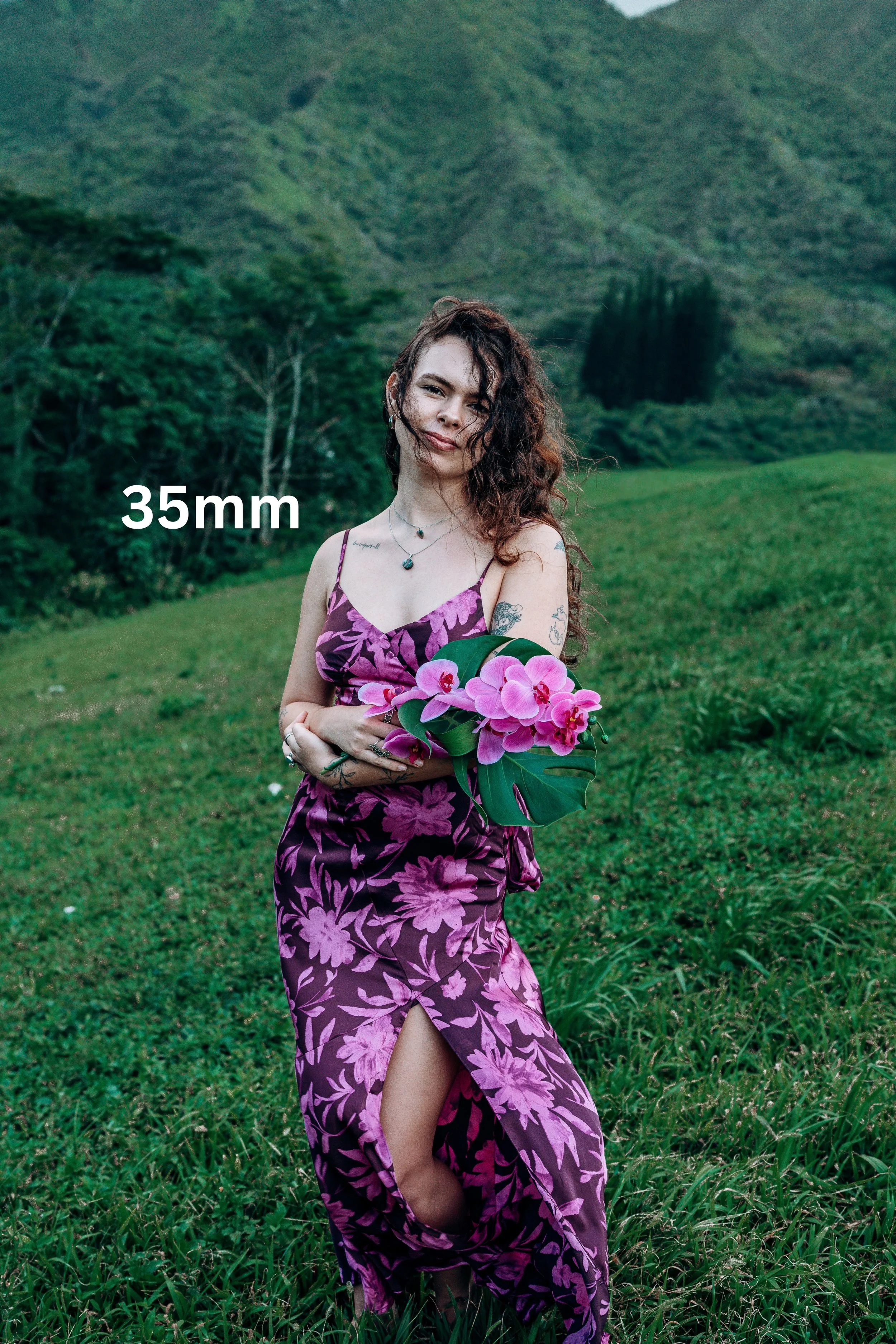
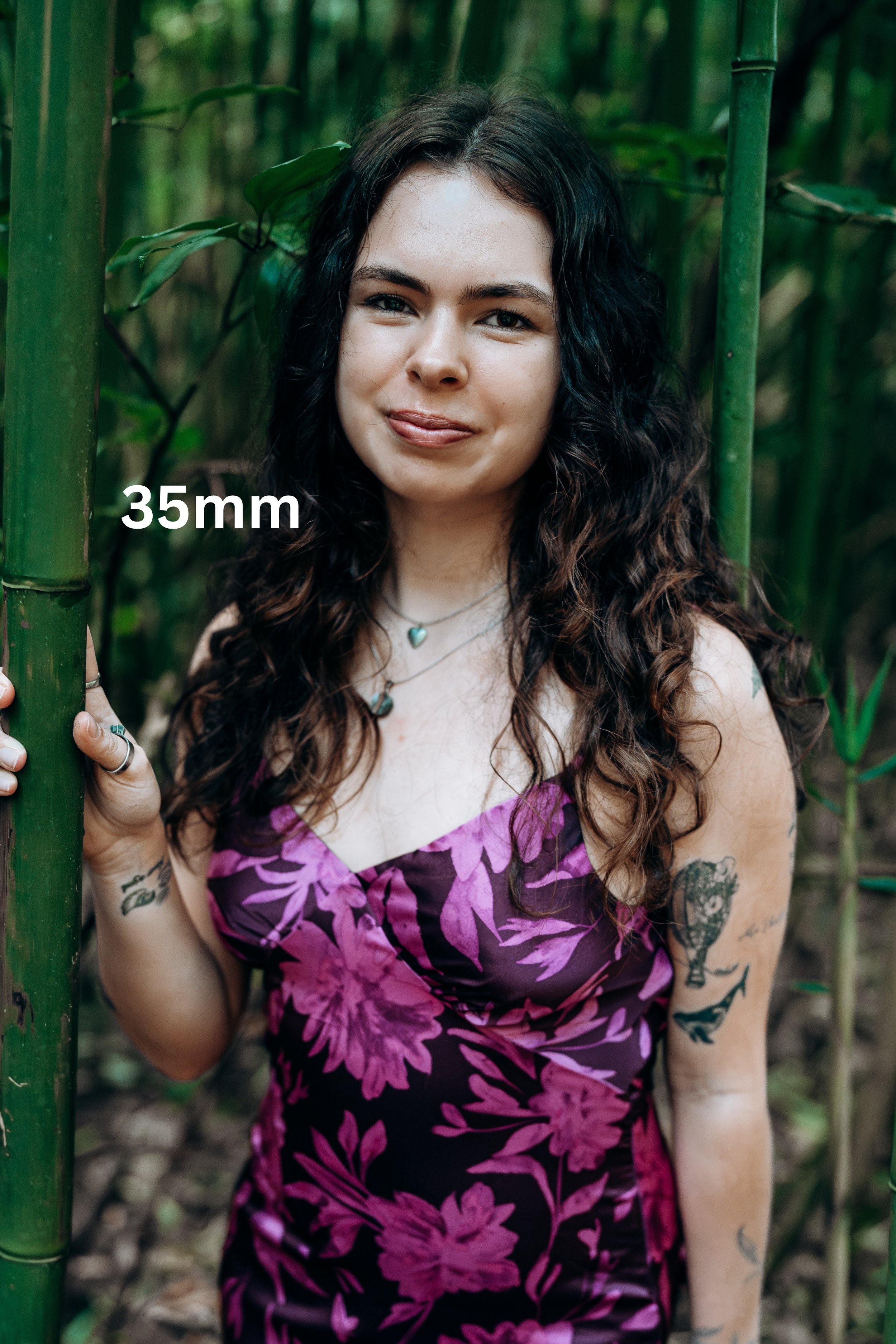
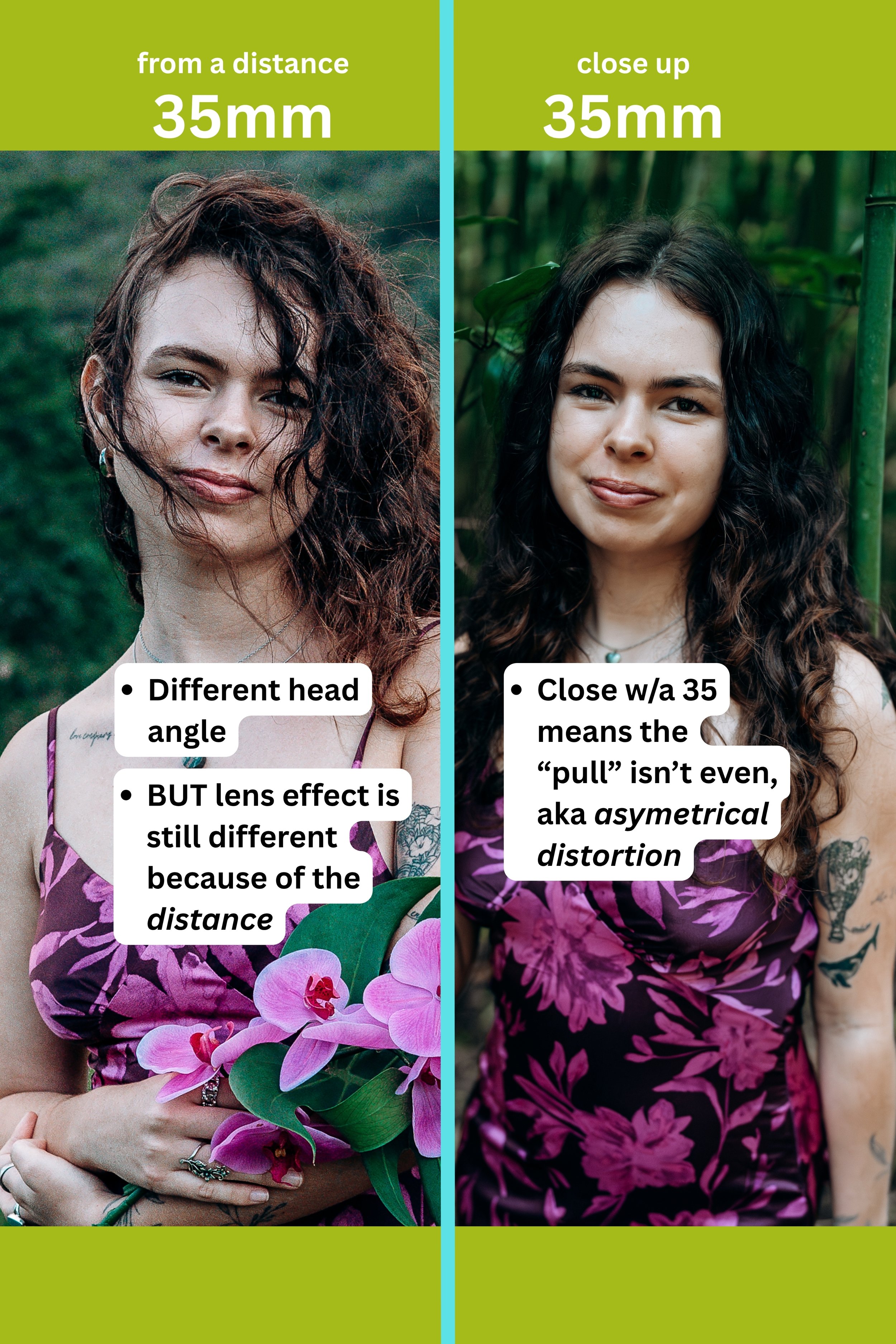
In fact, a portrait taken with a 35mm lens from a greater distance can look surprisingly similar to one taken with an 85mm lens. This is because both images share a similar perspective, which is controlled by distance rather than focal length.
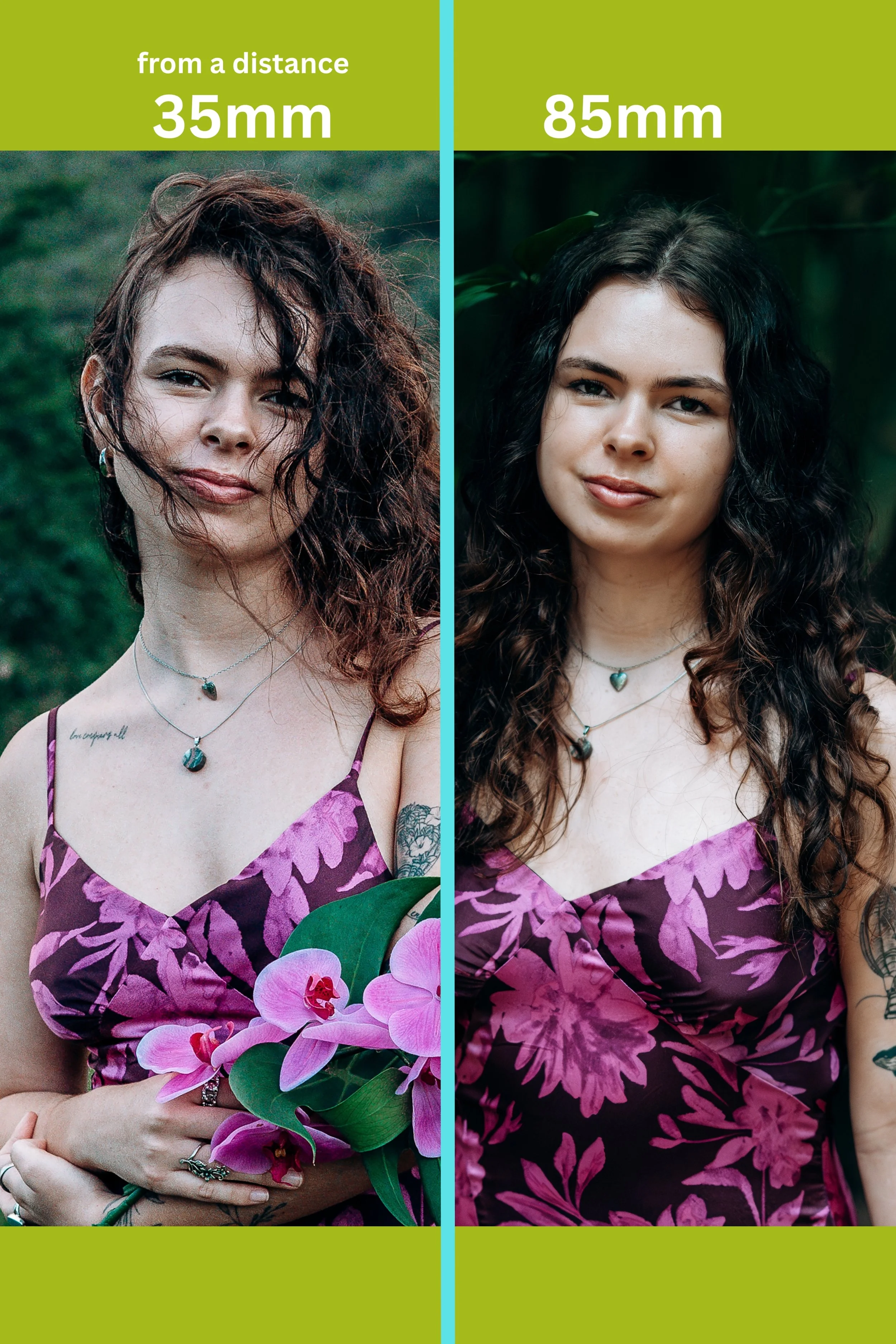
When a 35mm is used from a greater distance, it begins to resemble the look of an 85mm more than a 35mm shot taken up close.
This is one of the most important concepts to understand if you want your portraits to feel intentional, elevated, and painterly.
Another factor to consider is sharpness and depth of field.
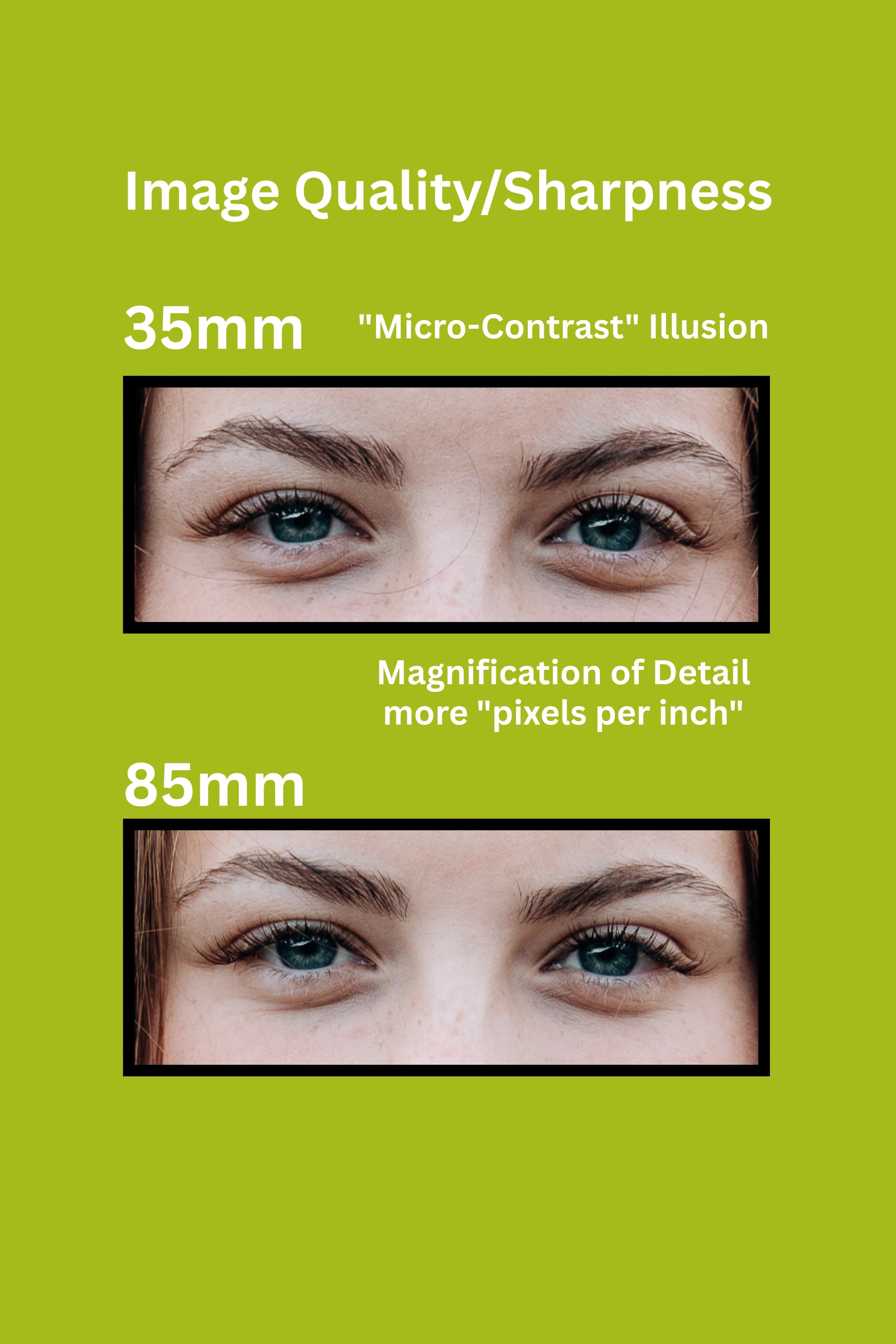
Although a 35mm image can appear sharper, this is often due to a micro-contrast illusion and a deeper plane of focus. In reality, an 85mm magnifies detail differently, creating a more selective focus and a softer, more painterly rendering.
Images taken with a 35mm lens can appear sharper, but this is often because more of the subject is in focus. Wider lenses naturally create a deeper plane of focus. On the other hand, an 85mm lens produces a much thinner plane of focus. You might have the eye perfectly sharp, while the eyelashes and surrounding features gently fall out of focus.
This selective focus is what creates that dreamy, artistic, and almost painterly quality that many photographers are drawn to.
However, it is absolutely possible to achieve a similar effect with a 35mm lens. The key is understanding how to use distance intentionally. By stepping back and controlling your composition, you can create images that feel both sharp and dimensional without introducing distortion.
For those who prefer a more romantic and refined aesthetic, shooting closer with an 85mm lens can enhance that soft, glamorous look. This is often why many portrait photographers gravitate toward the 85mm focal length for their signature work.
Personally, I almost always choose an 85mm over a 50mm when creating portraits that feel artistic and immersive. The compression, the softness, and the way it renders the subject all align with the visual language of my work. At the end of the day, mastering portrait photography is not about choosing the “right” lens. It is about understanding how perspective, distance, and focus work together to shape the final image. Once you understand that, you can create portraits that feel alive, intentional, and beautifully painterly regardless of the lens you are using.
Are you wanting some new painterly, upgraded portraits? Let’s chat :)